When Markets Melt Down, Copy Trading Can Pour Gasoline on the Fire
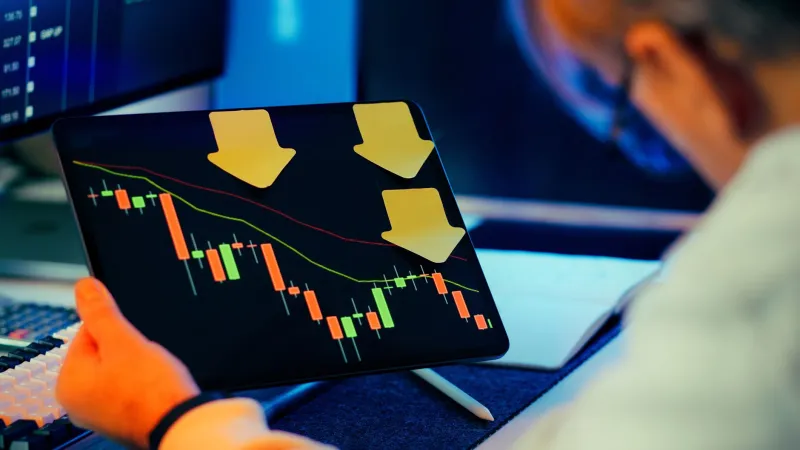
Imagine this: It's a Tuesday morning in early March. Markets are opening ugly. Futures were down overnight, some macro news hit after hours, and by the time US markets open, things are moving fast. Your copy trading setup is humming along in the background — you've got a solid lead trader, good track record, reasonable risk score. You figure you're covered.
But your trader closed their position at 9:32 AM. Your copy order didn't execute until 9:34 AM. In those two minutes, the position moved another 1.8% against you.
That gap — two minutes, 1.8%, multiplied across your position size — is what copy trading during a crash actually looks like. And it's just the beginning of the problems.
The Lag Nobody Talks About in the Brochure
Every copy trading platform has execution lag. It's a technical reality. When a lead trader places a trade, the platform has to detect it, process it, and then replicate it across potentially thousands of follower accounts simultaneously. Under normal conditions, this lag is measured in milliseconds to a few seconds — barely noticeable.
During a crash, everything changes.
Server loads spike as millions of traders act at once. Liquidity thins out as market makers pull back. Bid-ask spreads widen. And the platform's execution engine is suddenly trying to replicate trades for thousands of accounts in a market that's moving faster than usual.
The result is that your copy order might execute at a significantly worse price than your lead trader's original fill. In a slow market, a two-second lag is nothing. In a flash crash, it can be the difference between a 3% loss and a 7% loss.
This isn't hypothetical. During the COVID-driven market collapse in March 2020, multiple copy trading platforms reported execution delays and system slowdowns during peak volatility. Retail copiers who thought they were mirroring a protective exit often found themselves still holding positions minutes after their lead trader had already bailed.
Liquidity Doesn't Scale With Your Copiers
Here's a structural problem that even experienced copy traders overlook: lead traders typically manage their own account size, not the aggregate capital of all their followers.
If a lead trader has $50,000 in their account and 5,000 copiers each allocating $2,000, that's $10 million in total mirrored capital following a $50,000 account. In liquid markets like large-cap US equities, this usually isn't a problem. But in less liquid instruments — small-cap stocks, certain ETFs, crypto pairs, emerging market currencies — that kind of volume concentration can move the market.
When the lead trader exits a position in a volatile, illiquid market, their own exit is clean because their order size is manageable. But the wave of copy orders that follows is ten, twenty, or fifty times larger. That wave hits the order book and gets filled at progressively worse prices. The copiers at the back of the queue take the worst fills.
You might be one of those copiers, and you'd never know it from looking at your platform's interface.
Lead Trader Panic Is Real — And It's Contagious
We tend to think of lead traders as professionals who keep cool heads during downturns. Some do. Many don't.
Lead traders are human. When their account is down 15% in a week and they're watching their follower count drop, the psychological pressure is real. Some respond by making aggressive, emotional trades — doubling down on losing positions, panic-selling at the worst moment, or swinging to cash and missing the recovery.
The problem for copiers is that these emotional decisions get mirrored automatically. You don't get a notification that says "heads up, your lead trader is having a bad week and might be making fear-based decisions." You just see the trades execute in your account.
There's also a subtler dynamic: some lead traders know their follower count is a source of income. They may hold losing positions longer than they should because they're worried about the optics of locking in a loss — even if cutting the loss is the right financial move. That delay costs copiers real money.
Forced Liquidations and Margin Calls Hit Copiers Differently
If a lead trader is using leverage and gets margin-called during a crash, what happens to you?
The answer depends heavily on the platform, and most platforms don't make this crystal clear in their onboarding flow. In some cases, a lead trader's forced liquidation triggers an automatic exit in copier accounts too — which sounds protective but can mean you're getting sold out at the absolute worst price, right at the panic bottom.
In other cases, the copy relationship breaks down entirely during a liquidation event, and you're left holding a position the lead trader no longer has. You're now flying blind, in a crashing market, in a position you didn't choose independently.
This is one of those scenarios that sounds unlikely right up until it happens to you.
What You Can Actually Do About It
None of this means copy trading is a bad strategy during volatile markets — but it does mean you need to go in with a clear-eyed understanding of the risks that are specific to mirroring.
Set a stop-loss at the account level, not just the trade level. Most platforms let you set a maximum drawdown limit on your copy account. Use it. If your copy account drops 15%, you want it to pause automatically — not keep executing trades while you're asleep.
Evaluate how your lead trader performed in past downturns specifically. Anyone can look good in a bull market. Look at March 2020, Q4 2018, and the 2022 rate-hike selloff. Did they protect capital? Did they recover? How deep did their drawdown go?
Be skeptical of traders with very high leverage ratios. Leverage amplifies the lag problem enormously. A 5x leveraged position moving 2% against you while your copy order is processing is a very different experience than an unleveraged one.
Know your platform's policy on liquidation events before they happen. Read the terms. Ask support. Don't find out during a crash.
Crashes are the real test of any investment strategy. In copy trading, they're also a test of the infrastructure you've chosen to rely on. The best lead trader in the world can't help you if the mechanics of mirroring turn their exit into your entry.